- ListedAI Daily
- Posts
- AI Moves at War and in Medicine
AI Moves at War and in Medicine
Palantir trains drones in Ukraine while Microsoft speeds lung cancer detection with AI.
In partnership with


Wednesday Deep Dive
(Reading Time: 4 minutes)
Help us make better ads

Did you recently see an ad for beehiiv in a newsletter? We’re running a short brand lift survey to understand what’s actually breaking through (and what’s not).
It takes about 20 seconds, the questions are super easy, and your feedback directly helps us improve how we show up in the newsletters you read and love.
If you’ve got a few moments, we’d really appreciate your insight.
The Wednesday Deep Dive takes a detailed look at what's new in AI. Each week, we share in-depth insights on new tools, proven prompts, and significant developments - helping tech professionals work smarter and stay ahead.
This week's stories show AI operating on very different timelines: one at the speed of war, the other at the speed of medicine. Both point to a broader reality. AI infrastructure is now being purpose-built for life-and-death decisions.
⚔️ Palantir and Ukraine launch AI "Dataroom" to train drone warfare models
🩺 Bristol Myers Squibb and Microsoft team up to speed lung cancer diagnosis
Let's dive in.
🌐 AI News
⚔️ Palantir and Ukraine Launch AI Dataroom for Battlefield Models
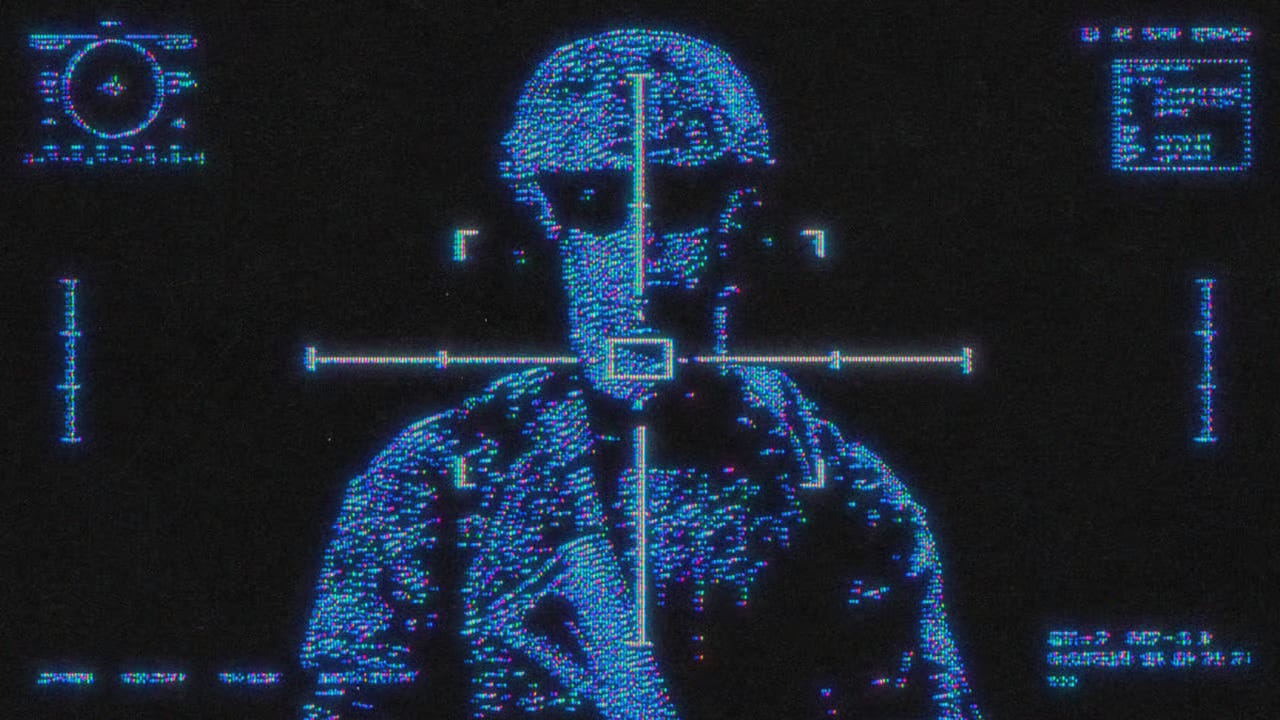
Palantir and Ukraine's defense tech initiative Brave1 have launched a new collaboration called the Brave1 Dataroom, an AI training lab designed to build battlefield applications using real war data.
The partnership brings together Ukraine's Ministry of Defence, its Armed Forces, and its Defence Intelligence Research Institute to contribute operational data and use the resulting AI insights. Palantir has been providing battlefield intelligence support to Ukraine since 2022, including de-mining analysis and fire targeting. This is the next phase of that relationship.
The first project will focus on autonomous drone detection and interception. Initial datasets include curated visual and thermal imaging libraries of aerial targets, with a particular focus on Shahed drones. Those datasets will expand over time.
🧩 What They’re Building
Controlled data environments where classified battlefield data trains AI models without risk of exposure
Autonomous detection systems capable of identifying and responding to aerial threats in real time
Curated visual and thermal datasets of enemy drones, starting with Shahed-type loitering munitions
💡 Why it matters:
Ukraine is fighting a war where AI-assisted drones and autonomous systems play a central role for both sides. That gives it access to real-world operational data that doesn't exist anywhere else at this scale.
"There is no other country that has, sadly, that data asset," said Louis Mosley, Palantir's EVP for the UK and Europe, speaking at Davos this week.
Drones are no longer just reconnaissance tools. They're being used for targeting, interception, and strike missions. And the data generated from thousands of drone operations daily creates a training set that can't be simulated or replicated in a lab.
"Artificial intelligence is becoming a decisive factor on the modern battlefield," said Mykhailo Fedorov, Ukraine's newly-appointed minister of defence. "The first focus of the Dataroom will be advancing technologies for autonomous detection and interception of aerial threats, a capability that is crucial for Ukraine."
🔍 What This Means
What happens in Ukraine is being watched by NATO, the EU, and defense tech investors worldwide. The Dataroom is a test case for how AI and live conflict data can be fused to create battlefield tools faster than traditional defense procurement cycles allow. If successful, this could become a template for how allied nations build next-generation defense AI. The tools validated there will shape how future conflicts are fought, and how quickly AI moves from lab to live deployment.
🌐 AI News
🩺 Microsoft and Bristol Myers Squibb Speed Lung Cancer Detection

Microsoft and Bristol Myers Squibb have signed a partnership to accelerate lung cancer detection across the US using AI-powered radiology tools deployed through Microsoft's Precision Imaging Network.
The collaboration focuses on identifying non-small cell lung cancer (NSCLC) more quickly by automatically analyzing X-rays and CT scans. The tools will be rolled out across hospitals and clinics, with a focus on medically underserved communities, including rural hospitals and community clinics.
Lung cancer kills approximately 125,000 people in the US each year, with 227,000 new cases diagnosed annually. Mortality rates are higher in rural areas, where access to advanced imaging and specialist care is limited.
🧩 What They’re Building
AI-powered radiology tools that automatically scan X-rays and CT images for signs of lung disease
Automated detection systems for hard-to-detect nodules that can indicate early-stage NSCLC
Background analysis software integrated into the Precision Imaging Network, already used by 80%+ of US hospitals.
💡 Why This Matters
Microsoft's AI tools scan medical imaging to detect lung disease, including small nodules that can be easy to miss in manual reviews. The system runs in the background, flagging potential cases for clinician review.
Because the Precision Imaging Network is already deployed at scale, the rollout can happen quickly without requiring new infrastructure or major workflow changes.
"With Microsoft's AI-powered radiology technology platform widely deployed within healthcare delivery organizations across the country and operating behind the scenes, clinicians can more easily identify patients who may be showing early signs of cancer, often before they are aware of any symptoms, and help guide them into the appropriate care pathway sooner," said Peter Durlach, corporate vice president and chief strategy officer for Microsoft Health and Life Sciences.
Bristol Myers Squibb markets Opdivo, a drug used to treat NSCLC and other cancers. Earlier and broader diagnosis could expand the eligible patient population and improve treatment outcomes.
🔍 What This Means
The partnership reflects a broader trend: pharmaceutical companies are increasingly collaborating with tech platforms to influence the diagnostic stage of care, not just the treatment stage. As AI becomes more accurate at detecting disease, expect more drug makers to integrate their products into AI-assisted care pathways. The question is how those partnerships are structured and whether they prioritise patient access or commercial expansion.
Want to unsubscribe from future emails? Just hit “unsubscribe” below.